Why Money Management Matters - Even on Small Amounts
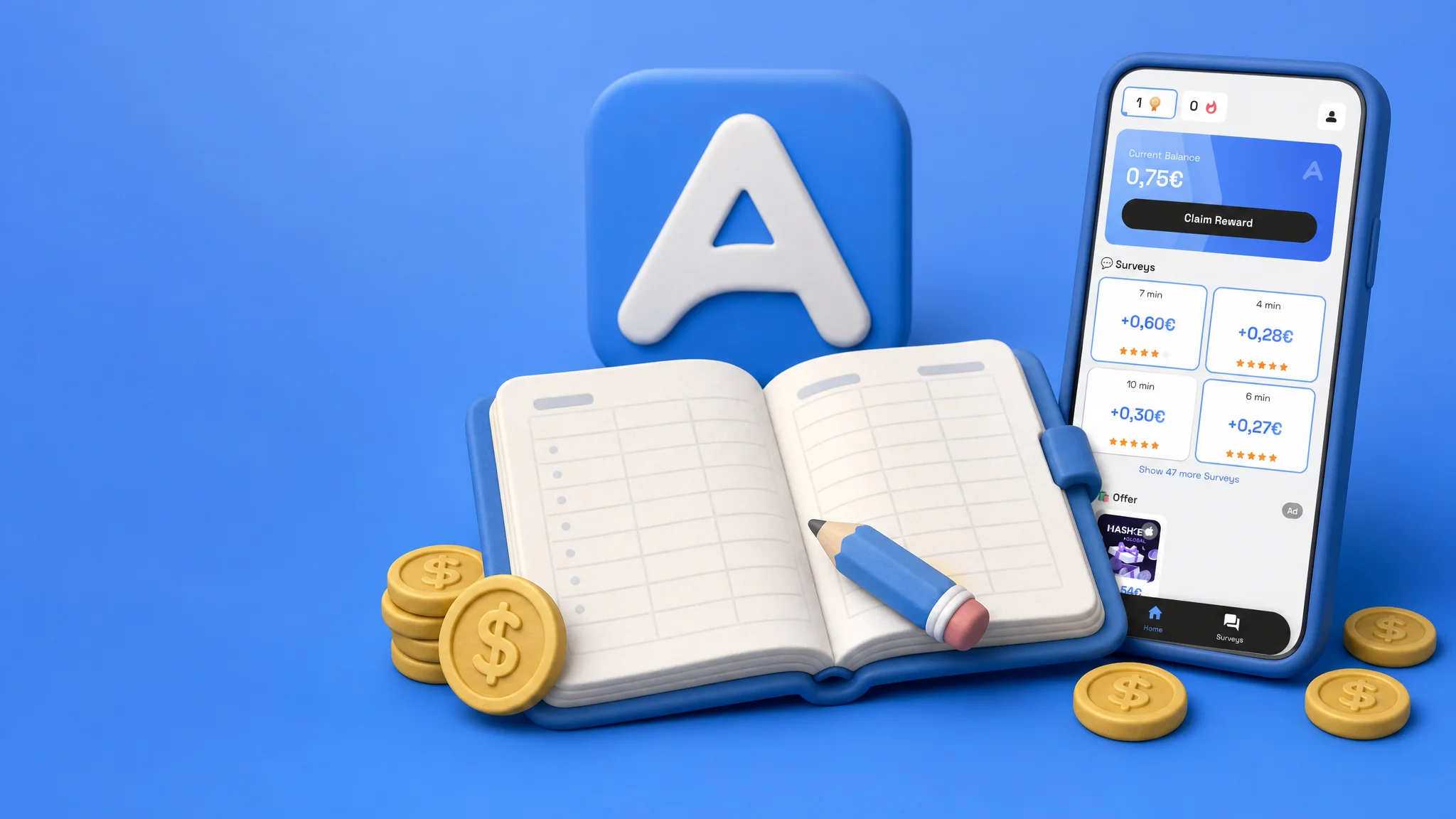
Money management isn't a topic that excites most people, which is part of why it works. The boring habits - knowing what's coming in, knowing what's going out, having a small buffer for surprises - beat the exciting ones almost every time. And the rules don't change based on income. Someone earning $30,000 with a real budget tends to feel more in control than someone earning $300,000 without one. Start in your browser at airperks.app, or download the app to add a small spare-time income stream while you build the habit.
Here's the honest case for managing your money, even when there's not very much of it to manage yet.
Where AirPerks fits in
Money management is easier when you have an extra trickle to commit to specific things - savings, debt paydown, an annual subscription jar. AirPerks gives you exactly that.
- Sign up. Open the AirPerks web app or install the mobile app - both work, no credit card required. The starter survey unlocks your first $0.50.
- Run paid surveys in spare time. Five-to-fifteen minutes per study, paid per completion. AirPerks layers Missions, Streaks, Bonus Day, Fragments, and Cashback on top of the base survey reward.
- Cash out at $5 ($3 once you hit Level 30). Pick PayPal, bank transfer, gift cards, or - in the US - Air+ mobile plan credit. PayPal and bank transfer have zero fees.
- Treat the cashout as committed money before it lands. Decide in advance which jar (savings, debt, irregular expenses, fun) it's going into. The whole point of new money is having a destination for it.
How long it takes for AirPerks to feel meaningful
The first $0.50 lands within minutes of signup. The first $5 cashout is realistic in one focused session. Some users have earned over $1,000 across the platform - real outcomes from people who built a habit, not a guarantee. Earnings vary based on your demographic profile, how often you log in, and which surveys are available in your region. For most casual users, a few dollars a week is the right expectation. The win is consistency, not size.

6 reasons money management matters
1. Goals stay vague unless you write them down
"Save more money" is not a goal. "Save $1,000 by November to cover my deductible" is. The difference between the two is whether you can tell, on any given Tuesday, whether you're on track. Most people don't have written financial goals, which is partly why most people feel like they're falling behind.
A written goal turns abstract dread into a target. Even on small amounts: "Save $20 a week toward a $1,000 emergency fund" gives you a year-long plan with a specific finish line. Without it, $20 a week disappears.
2. You spot waste only when you look
Most expensive financial leaks are small and recurring. A $14/month subscription you don't use. A bank account that charges a $5 monthly fee you didn't notice. A meal-kit-delivery thing that became a habit. None of these would survive a five-minute audit, but they all live indefinitely if you never audit.
The point of money management isn't austerity. It's the audit. Spending $5 on coffee on Friday because you wanted coffee on Friday is not waste. Paying $14/month for a subscription you forgot you have is.
3. Optimization is hiding in plain sight
If your savings account pays 0.01% interest while online banks pay 4%+, that's free money you're leaving on the table for no reason. Same with: not setting up automatic transfers (so you forget to save), not negotiating your phone bill (so you keep paying the loyalty tax), not switching credit cards when a no-fee one would replace your annual-fee one. Each individual optimization is small. Stacked, they're significant.
The hardest part of optimization is knowing which knobs exist. Most of them are findable in 20 minutes of looking.
4. Knowing your patterns changes them
Some people are spenders. Some are savers. Some are scared of money in general and avoid looking at the numbers. Each pattern has its own pitfalls.
Spenders benefit from making spending less frictionless - moving money to a savings account immediately so it's not in the spendable pile. Savers benefit from giving themselves explicit permission to spend on things that matter, otherwise they tend to under-live. Avoiders benefit from setting up systems so the money manages itself even when they're not looking.
You can't pick the right tactic until you know what kind of person you are with money. Most people figure this out by their late twenties; some don't, and pay for it for decades.
5. Looking at the numbers makes you less anxious, not more
This is counterintuitive but consistent. People who don't look at their finances think things are worse than they are about half the time, and significantly worse than they are about a quarter of the time. The dread is bigger than the reality. People who look at their finances regularly know exactly where they stand - even when that's not great, knowing is less stressful than guessing.
The first audit is uncomfortable. The fifth one is just a Sunday afternoon thing.
6. Compounding doesn't work without a plan
Investing $50 a month for thirty years at 7% returns produces about $60,000. Investing nothing for thirty years produces $0. The math of compounding is unforgiving in both directions: a small consistent contribution compounds to something significant; nothing compounds to nothing.
Money management is what makes the consistent contribution possible. Without a plan, the money that should be invested gets spent on things you won't remember.
A simple management system
If you're starting from zero, here's a very stripped-down version that works:
- Know what comes in. Total monthly income, including spare-time earnings.
- Know what goes out. A rough breakdown - fixed bills, food, fun, savings.
- Have a small emergency fund. $500 to start, then $1,000, then build to one month of expenses.
- Save before you spend. Auto-transfer to savings on payday, treat what's left as your spending budget.
- Audit once a month. 20 minutes. What's the balance, what's recurring, what looks weird.
That's it. You can layer fancier things on top later (investing, multiple savings buckets, debt payoff strategies). The basic version covers most of the value.
Frequently asked questions
Do I need to manage money carefully if I'm broke? Yes. Broke is when management matters most, because every dollar has a meaningful job. People who feel broke and then look at their numbers often find $50–$200/month they didn't realize they were leaking. That's not nothing.
Where should I keep my emergency fund? A high-yield savings account at an online bank, separate from your everyday checking. The friction of having to transfer it back is the point - it makes the money slightly harder to spend on impulse.
Is budgeting actually worth the time? After the first month, it takes 15–20 minutes a month to keep a budget current if you use any modern app or spreadsheet. The return on that 20 minutes is one of the highest in personal finance.
How does AirPerks fit a budget? Treat AirPerks earnings as a specific income stream and route them to a specific bucket. "Everything I earn from AirPerks goes to savings" works because the rule is simple. "AirPerks money is fun money" also works for the same reason. The rule matters less than having one.
Can I use AirPerks earnings for my emergency fund? Yes. PayPal or bank transfer, both zero-fee, both fast. Set the rule that every cashout goes there until the fund is full, then redirect to the next bucket.
Build the habit, fund the habit
- In your browser: airperks.app →
- On your phone: download the AirPerks app →
A minute to sign up. The first $0.50 lands after the starter survey, and from there it's whatever cadence and destination you decide.
Earnings vary based on user activity, demographic profile, and survey availability in your region. Top user earnings of $1,000+ are real but not typical. This article is general information, not financial advice.